Is the First Schedule That Works Really the Best One?


How Many Scheduling Scenarios Should a School Explore?
Every school wants to build a master schedule that works. Students receive their courses, teachers have their assignments, and classrooms accommodate the sections they need to run. But once a school has a workable schedule, how does it know whether it could have achieved a better outcome? The answer is simple - compare different scheduling scenarios.
As part of ScheduleX's State of Scheduling & Benchmarking Report, we analyzed how many scheduling scenarios 48 private schools explored before finalizing their master schedules. We found that the average school ran approximately 10-11 scenarios, while 45 of the 48 schools explored more than one. One school even ran 33 different scenarios.
These numbers reveal something interesting. Schools weren't necessarily accepting the first schedule that met their requirements. They were exploring alternatives before deciding which version worked best for their priorities.
And that raises an important question: If your school builds only one workable schedule, how do you know what you might be giving up?
Why Does Comparing Scheduling Scenarios Matter?
Building a master schedule involves balancing several competing priorities. Schools want to fulfill student course requests, manage teacher workloads, balance class sizes, and make effective use of their classrooms. A schedule might achieve 97% course fulfillment, but could a different arrangement reach 99%? Could the school distribute students more evenly across sections without increasing teacher workloads? Could changing room assignments create space for another elective?
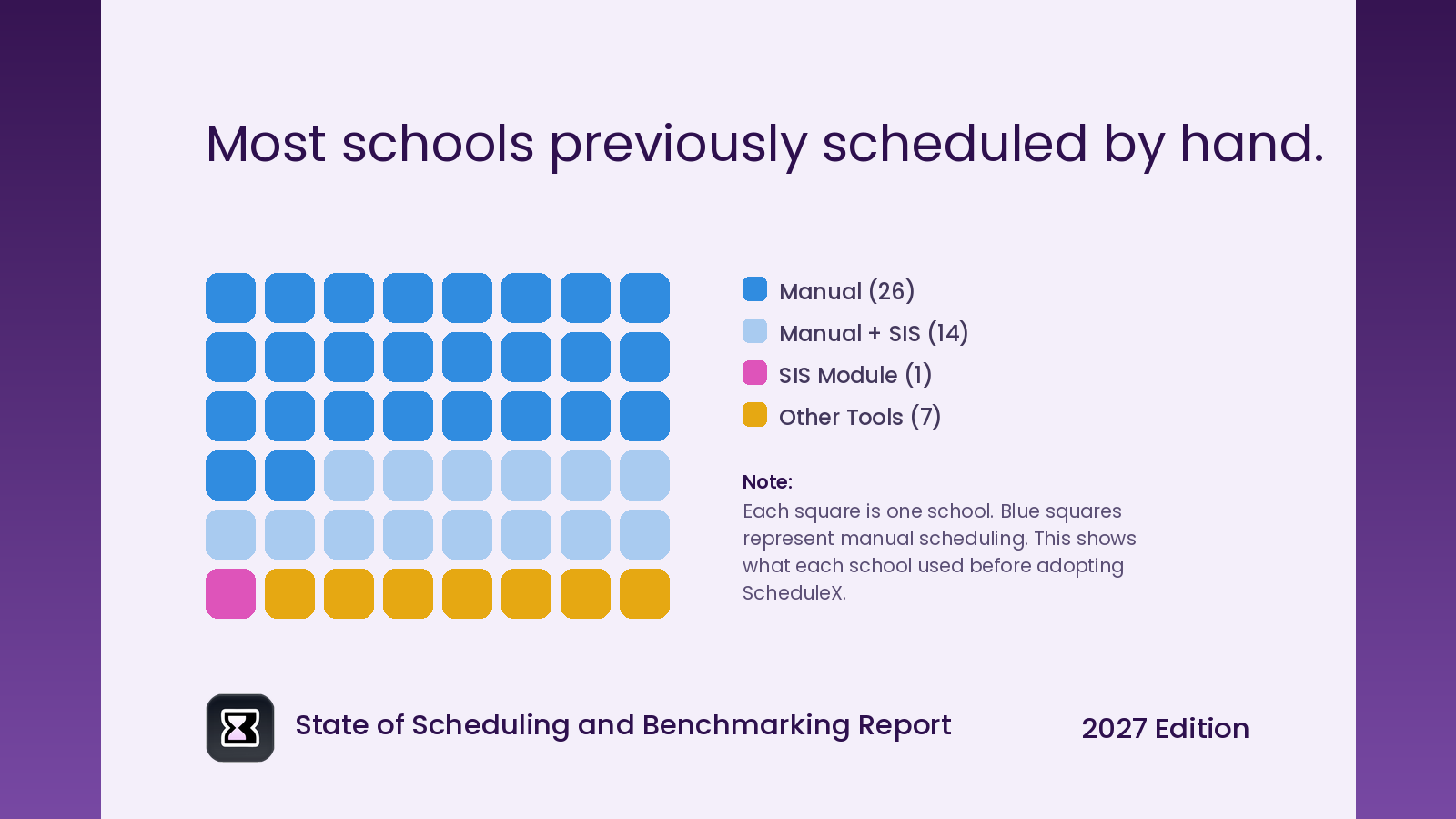
Without testing alternatives, it's difficult to know whether these improvements are possible. For schools that schedule manually, exploring different scenarios can be particularly challenging. Building even one workable schedule can take weeks, and making significant changes often means revisiting decisions across the entire timetable.
As a result, schools may settle on a schedule once it meets their essential requirements, even if they haven't explored whether another version could better serve their priorities.
From the Field
Consider a school that had been trying to fill an open science teaching position for several months. By June, the school still hadn't found a suitable candidate and faced the prospect of hiring an additional teacher at an estimated cost of $80,000. Instead of assuming the school needed another hire, the scheduling team decided to test a different scenario. Could the existing faculty accommodate the required science sections without adding another teacher?
By exploring alternative teaching assignments, the school found a workable arrangement that allowed it to cover the sections with its existing faculty. The school avoided an additional $80,000 hiring expense by testing an alternative scheduling scenario.
This example illustrates why comparing schedules can be valuable beyond improving the timetable itself. Sometimes, testing an alternative reveals that a decision a school considered necessary may not be necessary after all.
Questions School Leaders Should Be Asking
1. Do we know what we gain or give up with each scheduling scenario?
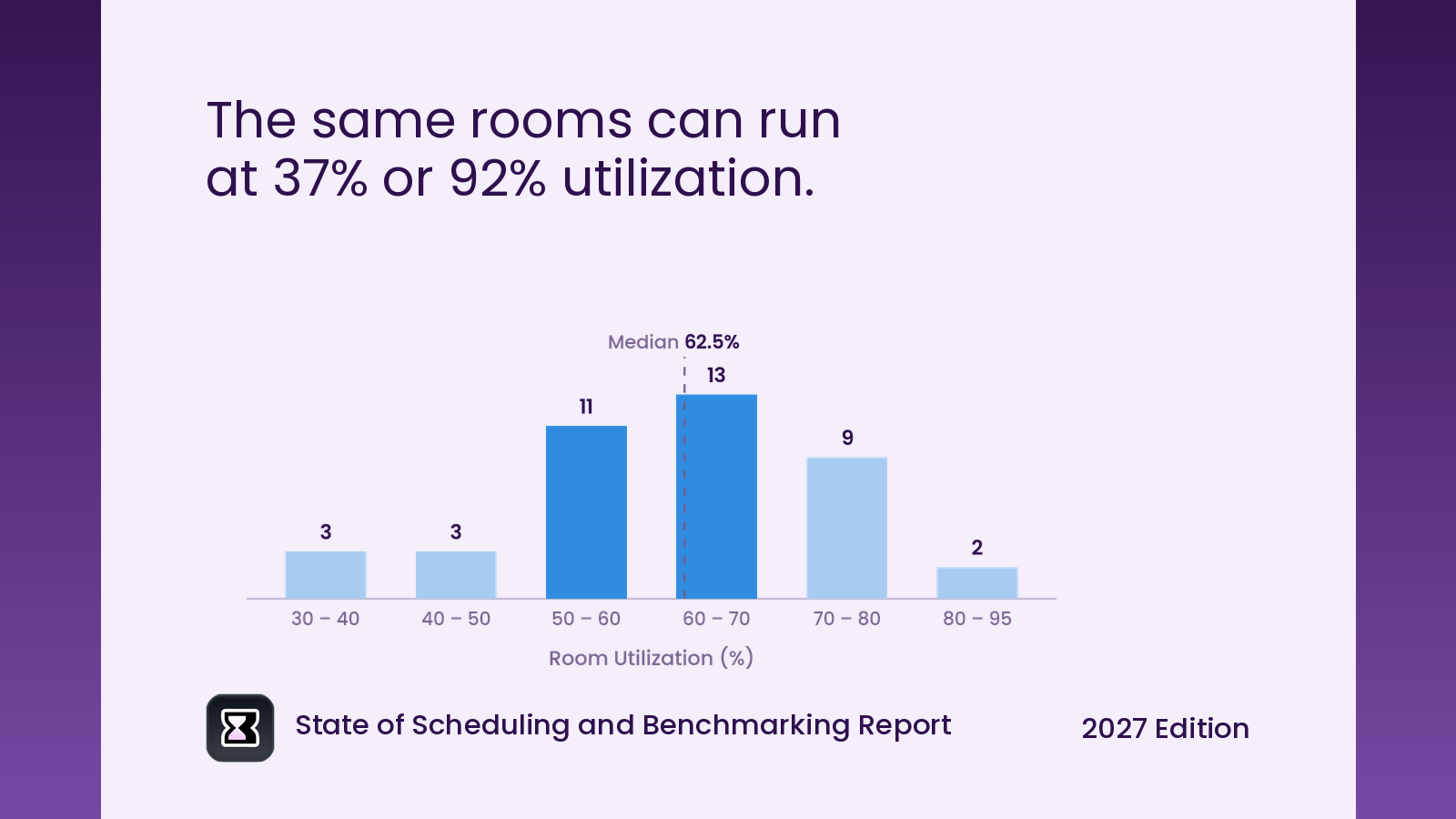
Rather than evaluating each schedule in isolation, compare how different scenarios affect course fulfillment, teacher workloads, class sizes, room utilization, and other priorities. A scenario that improves one metric may affect another, and understanding those trade-offs can help schools make more informed decisions.
2. Which scheduling decisions have we treated as fixed without testing alternatives?
Schools often establish teacher assignments, section counts, and other requirements before building the schedule. Some of these decisions are essential, but others may have room for flexibility. Could testing different scenarios reveal opportunities that the original assumptions didn't allow?
3. How do we decide which schedule is best?
Is the final schedule simply the first version that meets all the requirements, or does the school compare different outcomes before making a decision? Consider whether academic leaders and other stakeholders have agreed on which scheduling priorities matter most and what trade-offs they're willing to accept.
What Does This Mean for Your School?
The findings suggest that exploring multiple scheduling scenarios can help schools make more informed decisions about their master schedules. But that doesn't mean every school should aim to run 10 or 30 scenarios. Some schools may achieve their desired outcomes after testing only a few alternatives, while others may need to explore more possibilities because of their academic programs and scheduling constraints. The number of scenarios alone doesn't determine the quality of the final schedule. What matters is whether schools have enough information to compare their options and make deliberate decisions.
A caveat on the numbers: All schools in this analysis use ScheduleX, which makes it easier to generate and compare alternative schedules. As a result, these findings may not represent how many scenarios private schools typically explore, particularly those building schedules manually.
We explore scheduling related metrics in ScheduleX's State of Scheduling & Benchmarking Report, using data from 48 private schools across 18 U.S. states and territories. Check out the findings and see how your school's scheduling outcomes compare with other schools.
More Insights
Get the inside scoop: the latest tips, tricks, & product updates

Your questions, our
answers
Everything you need to know about ScheduleX. Find answer to the most common question
Absolutely! ScheduleX allows you to add all your rules and requirements - as complex as they come - directly into the system. Our algoirthm will then generate schedule scenarios based on these rules.
You can upload your school’s data, configure your rules and constraints, and our AI-powered algorithm will generate multiple schedule options for you to choose from. Alternatively, you can visualise and build your own schedule from scratch.
Once you upload your data, the first schedule can be ready in as quickly as a couple of hours.
No, but your SIS will definitely thank us.
Until you’re happy with what you have. No cap :)
You can export your schedule in a .csv file that can be easily imported into popular SISs like Blackbaud, Veracross, Facts and others.