Why Are So Many Schools Still Building Their Schedules by Hand?

How Much of School Scheduling Is Still Manual?
Imagine spending weeks building your school's master schedule, carefully placing every class, resolving conflicts, and accommodating student requests, only to lose all that work because someone erased a whiteboard. It sounds unlikely, but a school shared this exact experience with us. After weeks of manually arranging its schedule on a whiteboard, a member of the facilities team accidentally erased it during routine cleaning. The scheduling team had to start over. While this might be an extreme example, it highlights a larger problem with how many schools still approach scheduling.
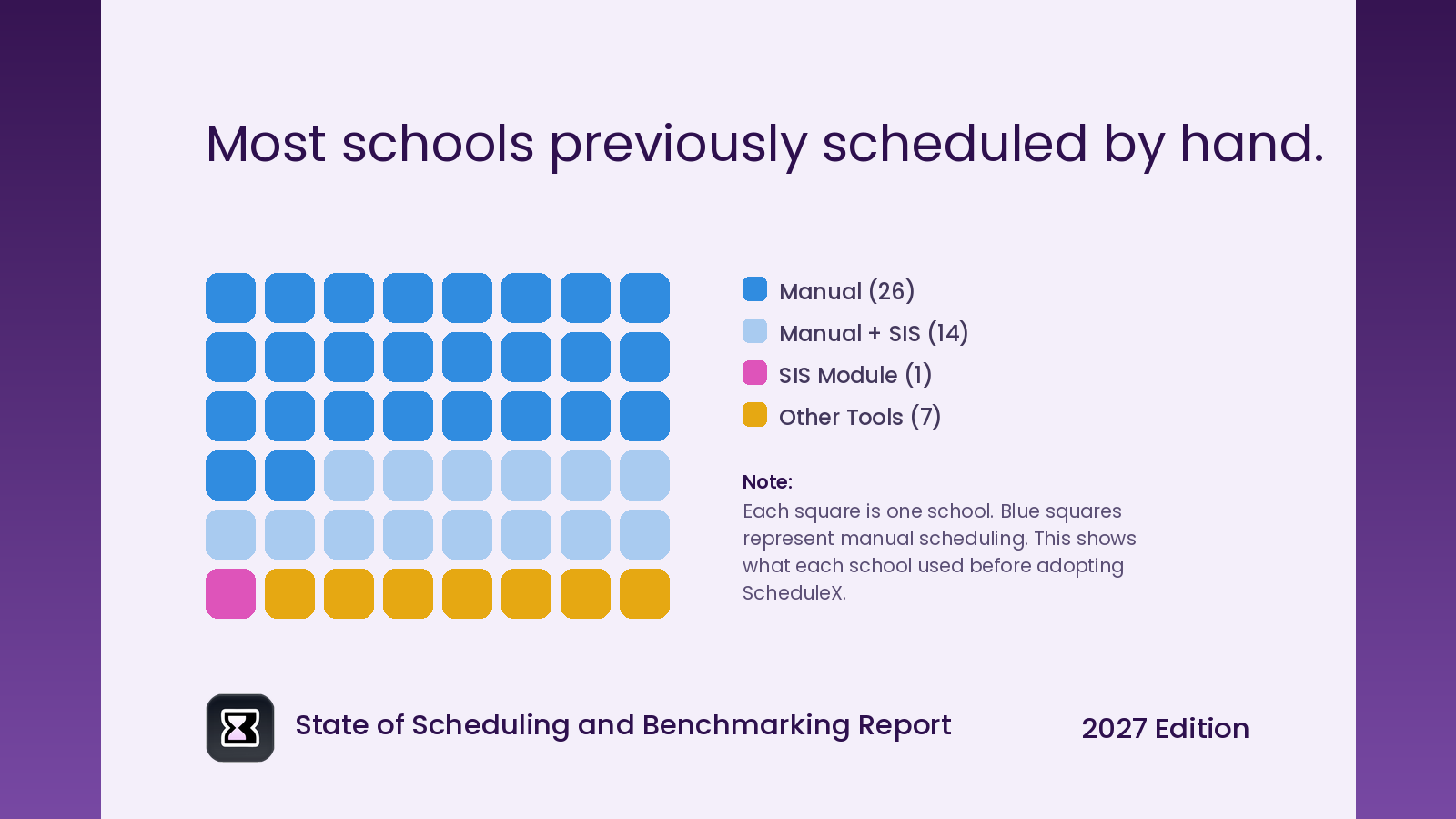
As part of ScheduleX's State of Scheduling & Benchmarking Report, we analyzed the previous scheduling methods of 48 private schools across 18 U.S. states and territories. We found that 40 of the 48 schools, or approximately 83%, relied on significant manual work to build their master schedules. This included spreadsheets, whiteboards, Post-it notes, and manual processes alongside their existing scheduling software.
What's particularly interesting is that many of these schools already had scheduling tools available through their Student Information Systems (SIS). Yet 85% reported that their SIS couldn't adequately handle their scheduling complexity.
It raises an important question: If schools already have scheduling software, why are so many still building their schedules manually?
Why Is Manual Scheduling Still So Common?
Building a school schedule involves accommodating hundreds, sometimes thousands, of interconnected requirements. Student course requests, teacher availability, classroom assignments, and academic policies all need to fit together. While many Student Information Systems offer scheduling functionality, some schools find that these tools cannot accommodate the complexity of their academic programs or the constraints they need to manage.
As a result, scheduling teams often turn to spreadsheets, whiteboards, and other manual methods to make the process work. When creating a single schedule takes weeks, testing alternative arrangements becomes difficult. Schools may not have enough time to evaluate whether different course placements could improve fulfillment, whether sections could be more balanced, or whether classrooms could be used more effectively. A manually built schedule can certainly work well. But without the ability to easily measure and compare outcomes, schools may struggle to determine whether they've achieved the best possible result.
What Does This Mean for Scheduling Quality?
A school might successfully accommodate every teacher, course, and classroom requirement without knowing whether it could have achieved better fulfillment, more balanced sections, or a different distribution of teaching loads because it has no way to iterate on the schedule. The discussion around scheduling shouldn't stop at whether a school can build a schedule that works. It should also consider how well that schedule meets the school's priorities. And, answering that requires schools to test and compare, and find the best possible version for their schedule.
Questions School Leaders Should Be Asking
1. How much of our scheduling process still depends on manual work?
Even schools with scheduling software may rely on spreadsheets or other manual methods to manage complex requirements. Consider which parts of your process require the most effort and whether those steps limit your ability to explore alternatives.
2. Are we measuring the quality of our schedule or simply whether it's complete?
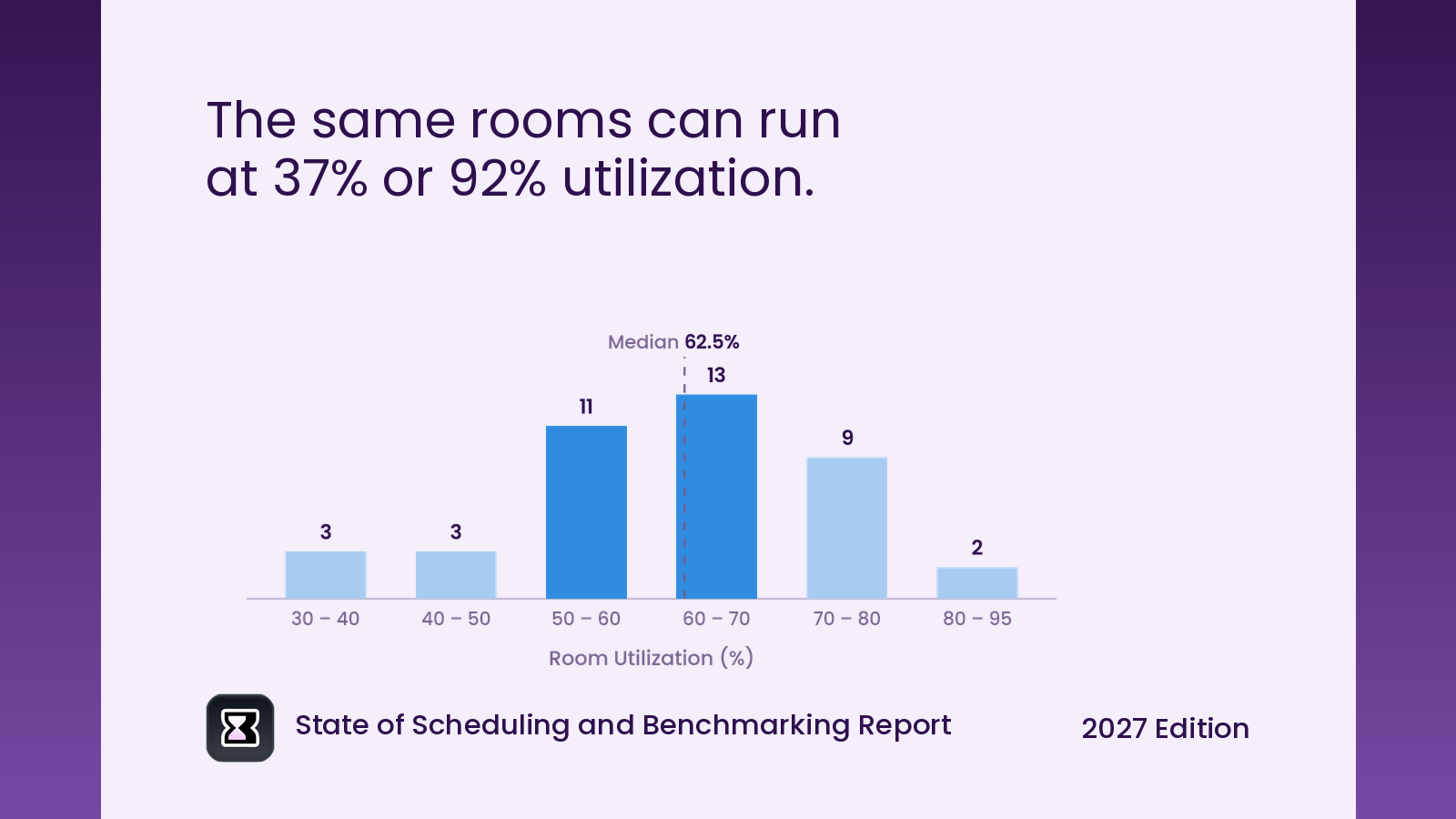
A complete schedule doesn't necessarily mean the school achieved its desired outcomes. Are you tracking course fulfillment, section balance, teacher workloads, and room utilization? These metrics can help you understand how well your schedule serves your academic priorities.
3. Does our current scheduling process allow us to improve year after year?
If your team spends most of its time building a workable schedule, how much time remains to evaluate the results? Consider whether your process allows you to compare outcomes, revisit scheduling decisions, and make improvements based on what you've learned.
What Does This Mean for Your School?
Manual scheduling has worked for schools for decades, often because experienced scheduling teams understand their academic programs and know how to accommodate complicated requirements. But as schools introduce more course offerings, scheduling preferences, and academic priorities, the limitations of manual processes can become harder to manage. The goal isn't simply to replace spreadsheets or reduce the time spent scheduling. It's to give schools the ability to evaluate their outcomes, understand the trade-offs they're making, and explore whether a better schedule is possible.
A caveat on the numbers: Schools self-reported their previous scheduling methods, so the findings reflect how they described their processes rather than an independent assessment. All schools in this analysis also use ScheduleX, which means the sample may not represent private schools as a whole.
Our State of Scheduling & Benchmarking Report explores various scheduling metrics using data from 48 private schools across 18 U.S. states and territories. Check out the full report to see how schools approach scheduling and how their outcomes compare.


Your questions, our
answers
Everything you need to know about ScheduleX. Find answer to the most common question
Absolutely! ScheduleX allows you to add all your rules and requirements - as complex as they come - directly into the system. Our algoirthm will then generate schedule scenarios based on these rules.
You can upload your school’s data, configure your rules and constraints, and our AI-powered algorithm will generate multiple schedule options for you to choose from. Alternatively, you can visualise and build your own schedule from scratch.
Once you upload your data, the first schedule can be ready in as quickly as a couple of hours.
No, but your SIS will definitely thank us.
Until you’re happy with what you have. No cap :)
You can export your schedule in a .csv file that can be easily imported into popular SISs like Blackbaud, Veracross, Facts and others.